Vegetable Powder Manufacturing: From Fresh Farms to Food Industry
Turning Fresh Produce into Ingredients
In the food industry today people want ingredients that are easy to use, good for you and last a long time. One way to meet this need is with vegetable powder. Vegetable powder is used a lot in food processing making supplements and ready-to-eat products. It has a mix of nutrition can be stored for a long time and is very versatile. The process of making powder. From the farm to the final product used in the food industry. Is really interesting. It combines farming, technology and quality control. Companies like Zivaroots are doing a job of providing high-quality vegetable powder to people all around the world.
Read Also: The Growing Demand for Dehydrated Vegetable Powders in Food Processing
Sourcing Fresh Produce from Farms
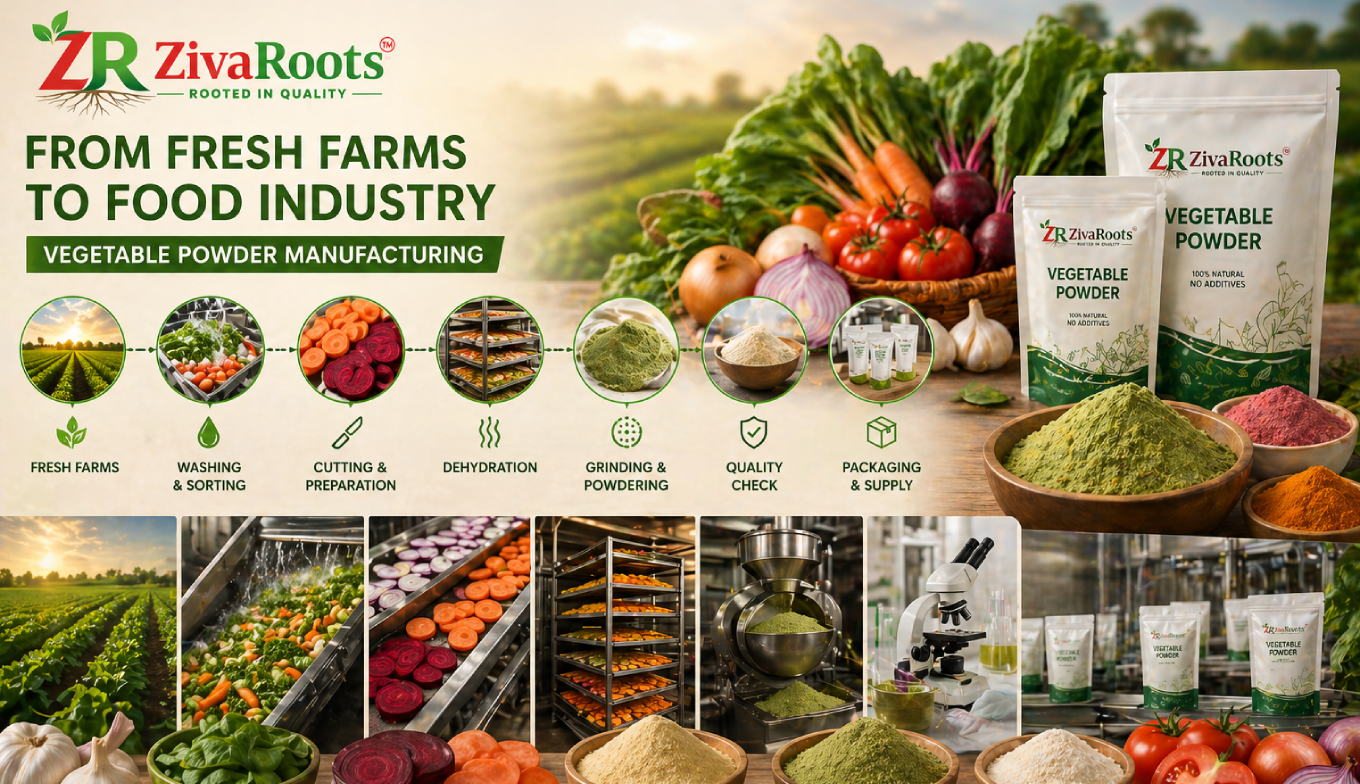
It all starts on the farm, where fresh vegetables are grown and picked. The quality of the vegetable powder depends on how good the raw materialsre. Farmers grow vegetables like onions, garlic, tomatoes, spinach, carrots and beetroot in conditions to make sure they are fresh and full of nutrients.
Good manufacturers work closely with farmers to get the produce. This helps make sure the produce is safe always available and meets quality standards. The vegetables are picked at the time, which is important for keeping their flavor, color and nutrients when they are made into powder.
Cleaning and Sorting: The First Step to Quality
When the vegetables get to the factory they are. Sorted very carefully. Any dirt, bad parts or damaged pieces are taken out to make sure only good vegetables are used. This is a step for keeping everything clean and safe to eat.
The factory uses machines to wash the vegetables without hurting them. After they are washed the vegetables are sorted by size, color and quality. This makes sure the final product is all the same, which’s very important for companies that make food. Vegetable powder is an ingredient, in many food products and the process of making it is very important. Vegetable powder manufacturing is a process that involves many steps from sourcing fresh produce to cleaning and sorting. Vegetable powder is used in different products and its quality is very important.
Cutting and Preparation
After we sort the vegetables we cut them into pieces so they dry well. The size and shape of the cuts depend on the type of vegetable. What we want to use it for. For example if we want to make vegetable powder we. Dice the vegetables into small pieces that are all the same size.
This step helps the vegetables dry faster and makes sure they dry evenly. If we do not prepare the vegetables properly the final powder may not be quality.
Dehydration: The Core of the Process
Dehydration is the important part of making vegetable powder. We remove the water from the vegetables so they stay healthy. There are ways to dehydrate vegetables, including hot air drying freeze drying and spray drying.
Hot air drying is a method where we use warm air to dry the vegetables slowly. Freeze drying is another method that keeps all the things in the vegetables but it is more expensive. We use spray drying for liquids.
The goal of dehydration is to remove water so the vegetables do not spoil. They last longer. At the time we want to keep the vegetables looking and tasting good and make sure they are still nutritious.
Grinding and Powder Formation
When the vegetables are dry we grind them into powder. We use machines to make the powder the right size. The powder can be fine or coarse depending on what we use it for.
For example if we want to use the powder to add flavor to foods we make it very fine. If we want to use it in snacks or baked goods we can make it a little coarser. Companies, like Zivaroots make sure the grinding is done in an controlled way so the powder is always good quality.
Quality. Testing
When it comes to making vegetable powder quality is really important. We test every batch to make sure it is good enough. We check things like how much water’s in it what color it is, how it tastes, if it has any bad bugs in it and how big the pieces are.
We have to follow rules like FSSAI, ISO and HACCP so that our food’s safe to eat. These rules are very important for companies that send vegetable powder to countries.
If we are very careful about quality then the people who buy from us will trust us.. We know that our final product will always work well no matter how it is used.
Packaging and Storage
We have to pack vegetable powder in bags so it does not get ruined. These bags keep air. Water out. We use machines to suck the air out of the bags and we use bags with many layers to keep everything out.
We can pack the powder in bags or big bags depending on what the customer wants. We also make sure to put the labels on the bags and store them in a safe place so they do not get ruined.
Applications in the Food Industry
Vegetable powder is used in different foods. It is used in ready to eat meals, noodles, soups, sauces, snacks and special mixes. It is easy to mix with things and it always tastes the same so food makers like to use it.
Some people use vegetable powder to make themselves healthier. They put it in supplements, protein mixes and foods that are good, for them. It is a way to get the good things you need every day.
Bakeries also use vegetable powder to make their products better. They use it to make bread, cakes and biscuits taste better and be healthier. Vegetable powder is an useful thing to have in the kitchen.
Advantages of Vegetable Powders
Vegetable powders are really useful in the food business today. They can be stored for a time, which means they do not spoil easily and we do not waste food. They are also light so they are easy to move store, which helps to lower costs.
We can get powders all year round even when the actual vegetables are not in season. This helps food companies to keep making food without any problems. Also vegetable powders are good for people who want food because they do not have any artificial additives or preservatives.
The Role of Reliable Manufacturers
To make vegetable powders we need manufacturers who know what they are doing and who we can trust. Companies like Zivaroots are very important because they give us high-quality products.
These companies use technology and check their products carefully to make sure they are good enough for people to eat. They also help food companies by giving them the products they need in quantities and in the way they want them. This makes them good partners for food manufacturers and exporters.
From Farms to Future Foods
Making vegetable powders is a process that turns fresh vegetables from farms into ingredients that can be used for a long time. Every step of the way from getting the vegetables to cleaning, drying, grinding and packaging them is important to make sure the products are good and consistent.
As people want food that’s easy to make, healthy and good for the environment vegetable powders will become even more important in the food business. With companies like Zivaroots leading the way businesses can use this new idea and stay ahead of their competitors.
Vegetable powder manufacturing is a part of the food industry and companies that make vegetable powders like Zivaroots are important for the food business. We can get types of vegetable powders, such, as onion powder, garlic powder and tomato powder from these companies. They also sell spinach powder in bulk and other natural food ingredients. Vegetable powder manufacturing, vegetable powder supplier, dehydrated vegetable powder and food processing ingredients are all part of what these companies do. They also export vegetable powders from India, which’s a big part of the dehydrated food industry.
Related Article: Benefits of Using Ingredients in Packaged Foods
What Are Dehydrated Vegetables and Why the Food Industry Depends on Them

2 Comments
The Future of Dehydrated Foods in the Global Food Industry - Ziva Roots
[…] Vegetable Powder Manufacturing: From Fresh Farms to Food Industry […]
Benefits of Using Ingredients in Packaged Foods - Ziva Roots
[…] Vegetable Powder Manufacturing: From Fresh Farms to Food Industry […]