Top 5 Benefits of Using Dehydrated Ingredients in Food Manufacturing
In the modern food manufacturing landscape, efficiency, consistency, and sustainability are more important than ever. One solution that continues to gain popularity across the industry is the use of dehydrated ingredients. From powdered vegetables and dried herbs to fruit flakes and instant mixes, dehydration technology has transformed how food products are developed, stored, and distributed.
Dehydrated ingredients are created by removing moisture from fresh raw materials through processes such as air drying, freeze-drying, or spray drying. This simple yet powerful technique offers a wide range of advantages for food manufacturers, making it a preferred choice in everything from ready-to-eat meals to snacks, soups, sauces, and bakery products.
Here are the top five benefits of using dehydrated ingredients in food manufacturing:
1. Extended Shelf Life
One of the most significant advantages of dehydrated ingredients is their long shelf life. Moisture is a key factor in the growth of microorganisms such as bacteria, yeast, and mold. By removing water content, dehydration drastically reduces the risk of spoilage.
Fresh ingredients often have a limited lifespan and require refrigeration or freezing, which increases storage costs and logistical complexity. In contrast, dehydrated ingredients can be stored for months or even years at room temperature without compromising safety or usability.
For Manufacturers, this means:
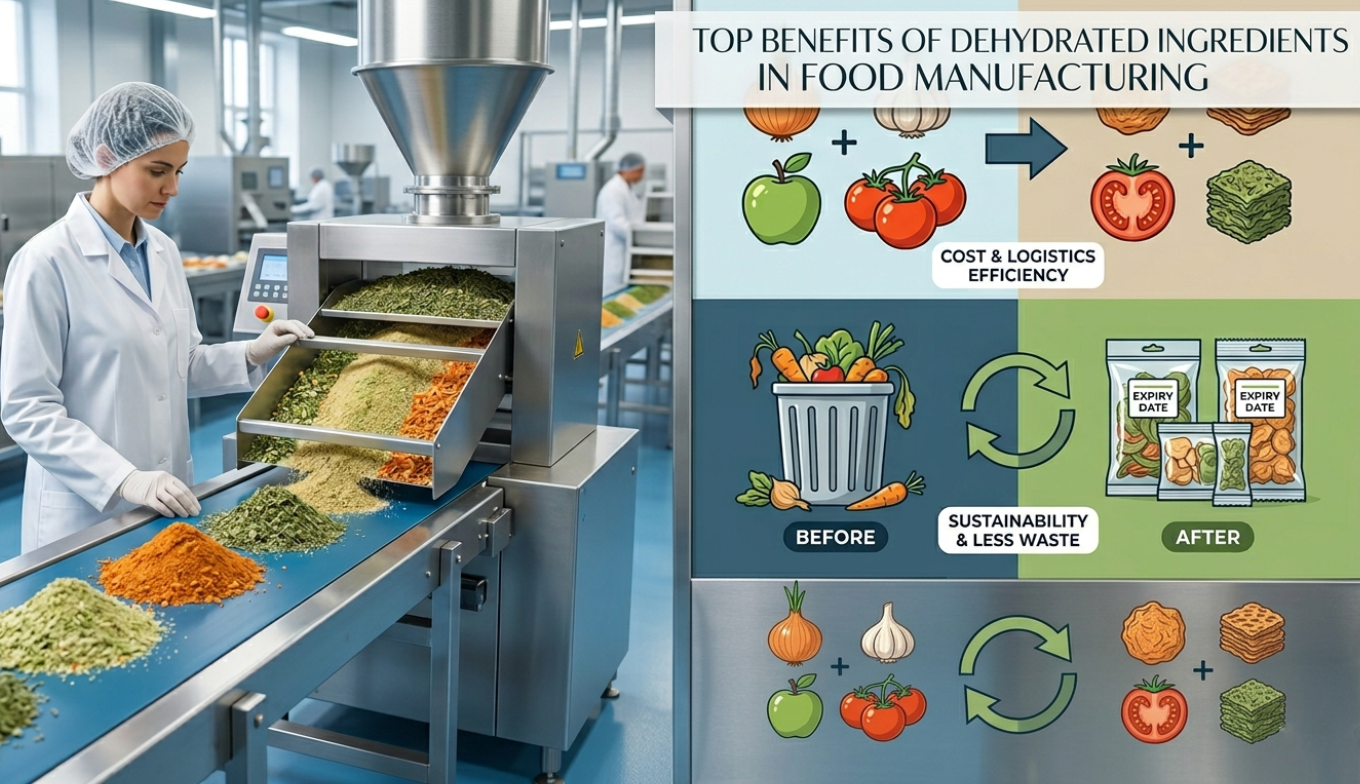
2. Cost Efficiency and Reduced Logistics Burden
Dehydrated ingredients are lighter and more compact than their fresh counterparts, which directly impacts transportation and storage costs. Removing water significantly reduces weight and volume, allowing manufacturers to transport larger quantities in less space.
For example, dehydrated onions or garlic powder occupy a fraction of the space compared to fresh produce. This leads to:
Additionally, since dehydrated ingredients do not require refrigeration, companies save on cold chain logistics, which can be expensive and energy-intensive.
From a financial perspective, these savings can be substantial, particularly for businesses operating at scale or exporting products internationally.
3. Consistency in Quality and Flavor
Maintaining consistency is a critical challenge in food manufacturing. Fresh ingredients can vary widely depending on factors such as seasonality, weather conditions, and sourcing locations. This variability can affect taste, texture, and appearance in the final product.
Dehydrated ingredients, however, are processed under controlled conditions, ensuring uniformity in:
For instance, powdered tomato or dried herbs provide a standardized flavor profile that helps manufacturers maintain product consistency across batches. This is especially important for brands that rely on delivering the same taste experience to consumers every time.
Consistency also simplifies recipe formulation and quality control processes, reducing the risk of production errors.
4. Convenience and Ease of Use
Dehydrated ingredients are incredibly versatile and easy to use in manufacturing processes. They are typically available in forms such as powders, flakes, granules, or slices, making them suitable for a wide range of applications.
Key advantages include:
For example, soup manufacturers can directly add dehydrated vegetables and spices into their formulations without any pre-processing. Similarly, instant noodle brands rely heavily on dehydrated components for flavoring and texture.
This convenience not only speeds up production but also reduces labor costs and minimizes human error in ingredient handling.
5. Sustainability and Reduced Food Waste
Sustainability has become a major focus in the food industry, and dehydrated ingredients contribute positively in this area. By extending shelf life and reducing spoilage, dehydration helps minimize food waste at both the manufacturing and supply chain levels.
Additionally:
Many manufacturers are now adopting dehydrated ingredients as part of their sustainability initiatives. By doing so, they not only improve operational efficiency but also align with environmentally conscious consumer expectations.
Furthermore, dehydration allows for year-round availability of seasonal ingredients, reducing dependency on imports and supporting more sustainable sourcing practices.
Additional Advantages Worth Noting
While the top five benefits cover the major advantages, there are several additional reasons why dehydrated ingredients are becoming indispensable in food manufacturing:
Applications Across the Food Industry
Dehydrated ingredients are widely used across multiple segments of the food industry, including:
Their adaptability makes them a key component in both traditional and innovative food products.
Conclusion
Dehydrated ingredients have revolutionized food manufacturing by offering a practical, cost-effective, and sustainable alternative to fresh raw materials. Their extended shelf life, reduced logistical burden, consistent quality, ease of use, and environmental benefits make them an essential tool for modern food producers.
As consumer demand for convenience foods and sustainable practices continues to grow, the role of dehydrated ingredients is only expected to expand further. For manufacturers looking to optimize operations while maintaining high product standards, incorporating dehydrated ingredients is not just an option—it’s a strategic advantage.
By leveraging the power of dehydration, food manufacturers can achieve greater efficiency, reduce waste, and deliver high-quality products that meet the evolving needs of today’s market.


1 Comment
Top Quality Dehydrated Ingredients for Food Manufacturers – Zivaroots - Ziva Roots
[…] Top 5 Benefits of Using Dehydrated Ingredients in Food Manufacturing […]